In this article
- What to do before buying closet organizers
- 1. Add a second hanging rod where short clothes allow it
- 2. Use slim, consistent hangers
- 3. Organize shoes vertically
- 4. Give stacks their own shelf dividers
- 5. Make the upper shelf a planned storage zone
- 6. Add a hanging organizer for folded items
- 7. Use the door carefully for shallow storage
- 8. Choose clear or labeled bins for the right items
- 9. Separate everyday clothes from seasonal clothes
- 10. Divide drawers by task
- 11. Hang accessories where you can see them
- 12. Keep frequently used items in open baskets
- 13. Use awkward corners for narrow categories
- 14. Give handbags dedicated support
- 15. Split long and short hanging items
- 16. Rotate seasonal clothing with a clear rule
- 17. Finish with a weekly five-minute reset
- Common small closet organization mistakes
- How to keep a small closet organized long-term
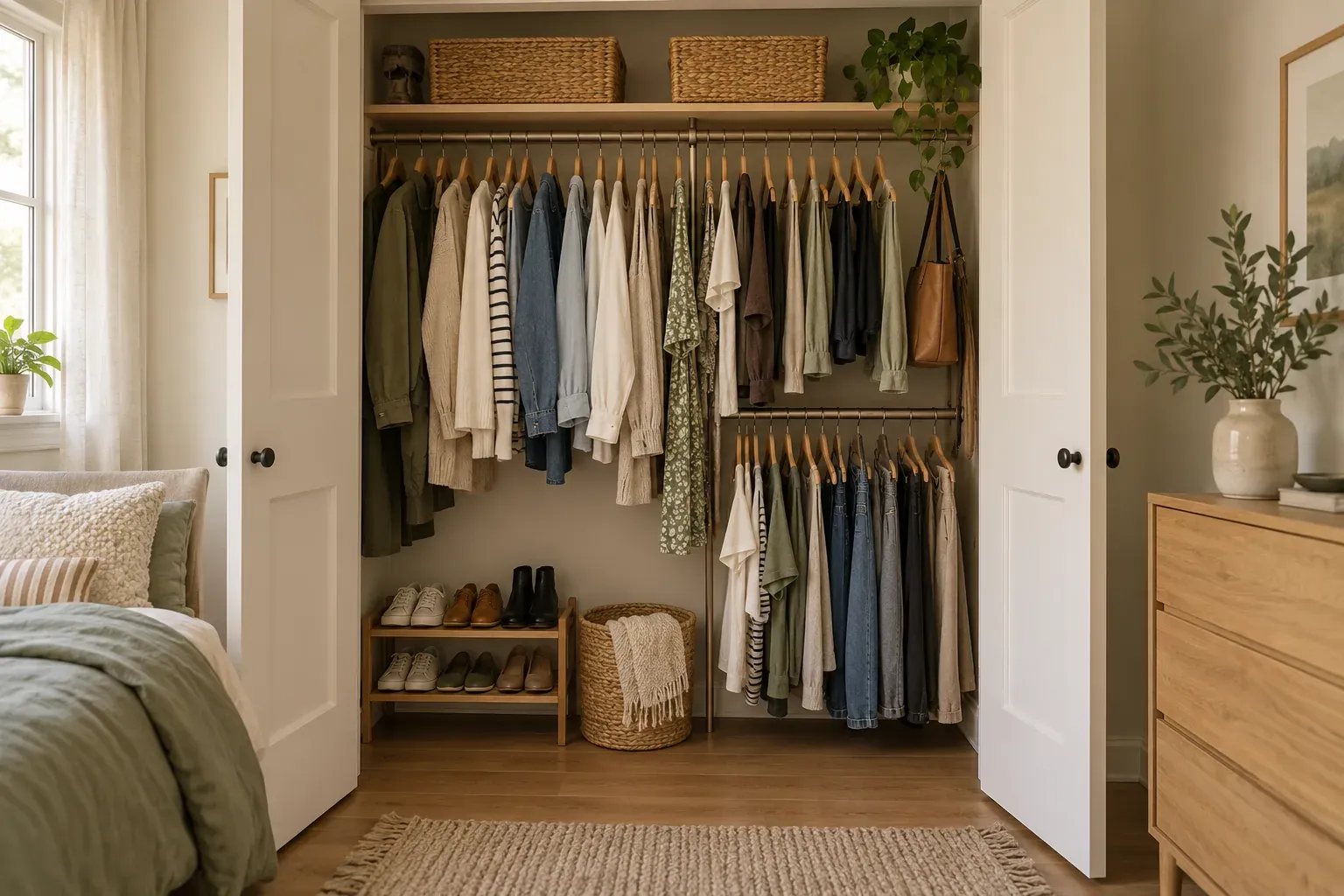
A small closet can feel full even when it holds only the clothes you use. The trouble is often its arrangement: one long rod wastes space below shirts, a high shelf becomes a jumble, and shoes drift onto the floor. You can recover useful room by giving each type of item a place that matches its size and how often you reach for it. Start with measurements and an honest edit, then choose only the organizers that solve a specific problem. These small closet organization ideas work for reach-in closets and many apartment wardrobes; you can adapt the same zoning principles to a larger closet, too.
What to do before buying closet organizers
Take everything out, group like items, and decide what still deserves closet space. Count long garments, short garments, folded pieces, shoes and bags. Measure the interior width and depth, the distance from rod to floor, the upper shelf, and how far the door swings. Note anything that limits installation, such as a sliding door, radiator, outlet or thin wall. Then put your most-used clothes at a comfortable height. An inexpensive box that fits your actual shelf is more useful than a complete organizer system that leaves dead space. Renters should check lease terms before drilling and test any removable product against its stated load and surface requirements.
1. Add a second hanging rod where short clothes allow it
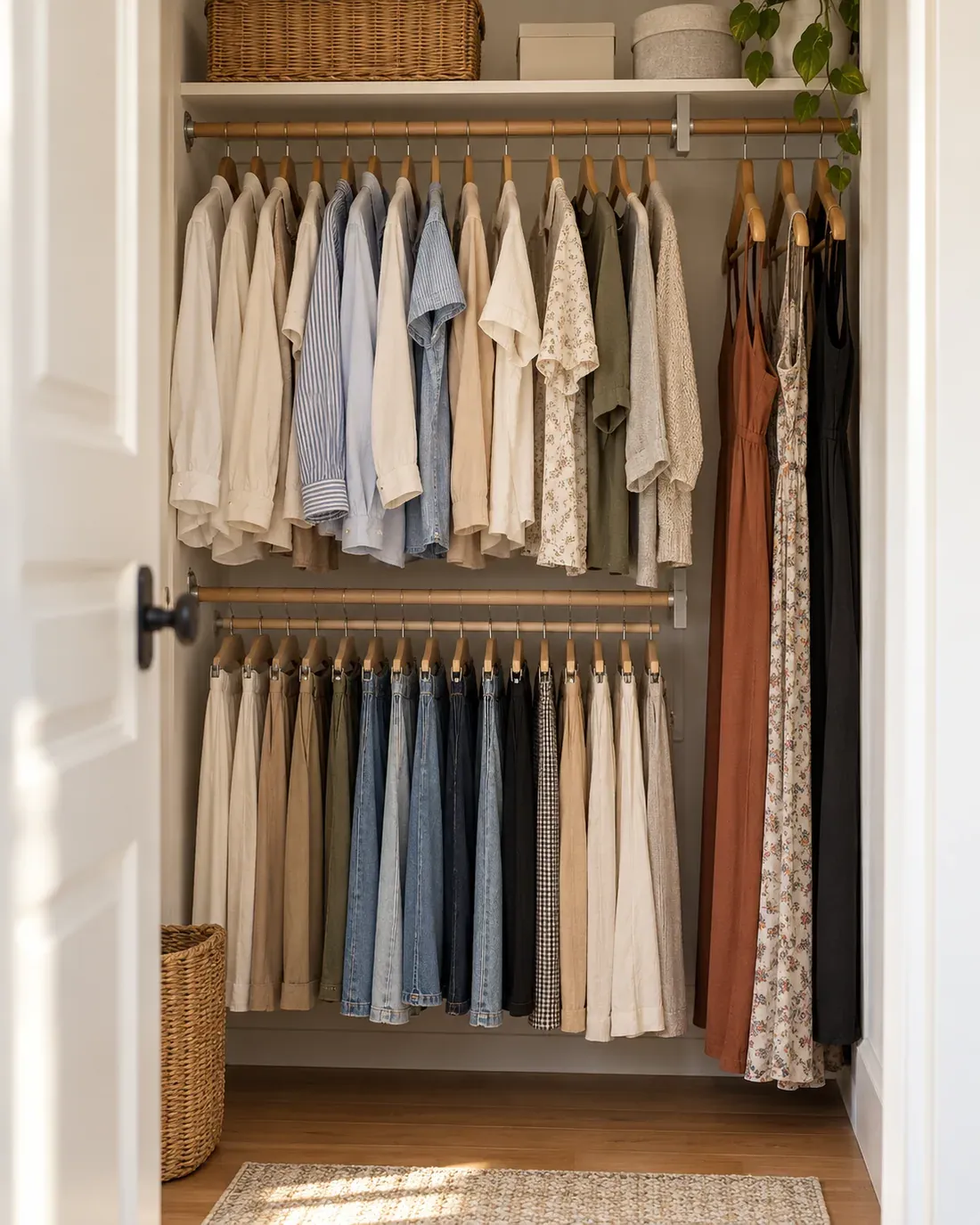
If most of your wardrobe is shirts, folded trousers and short jackets, one full-height rod leaves valuable space below the hems. A second rod creates two useful rows. Measure the length of your hanging clothes first, then allow enough gap that the lower row does not crush the upper one. Keep dresses and coats together on one side at full height rather than forcing every garment into double hanging.
Some systems attach to an existing rod; others need brackets secured to suitable framing or anchors. Check the load rating with a realistic allowance for heavy clothes. A second rod is a poor choice if it makes the lower row hard to see or the door rubs the clothes.
2. Use slim, consistent hangers
Changing a mismatched collection of bulky hangers can create a tidier, easier-to-scan rail. Slim hangers are particularly helpful for lightweight tops and shirts. Choose a shape that supports the garment: broad shoulders for structured jackets and a non-slip surface for delicate fabrics. Cramming more hangers onto the rail is not the goal; each piece still needs enough room to lift out without catching its neighbor.
As you switch hangers, place similar garments together and face hooks the same way. That small visual reset makes gaps and duplicates easier to spot. Keep a few sturdy hangers for heavier outerwear instead of expecting one type to do every job.
3. Organize shoes vertically
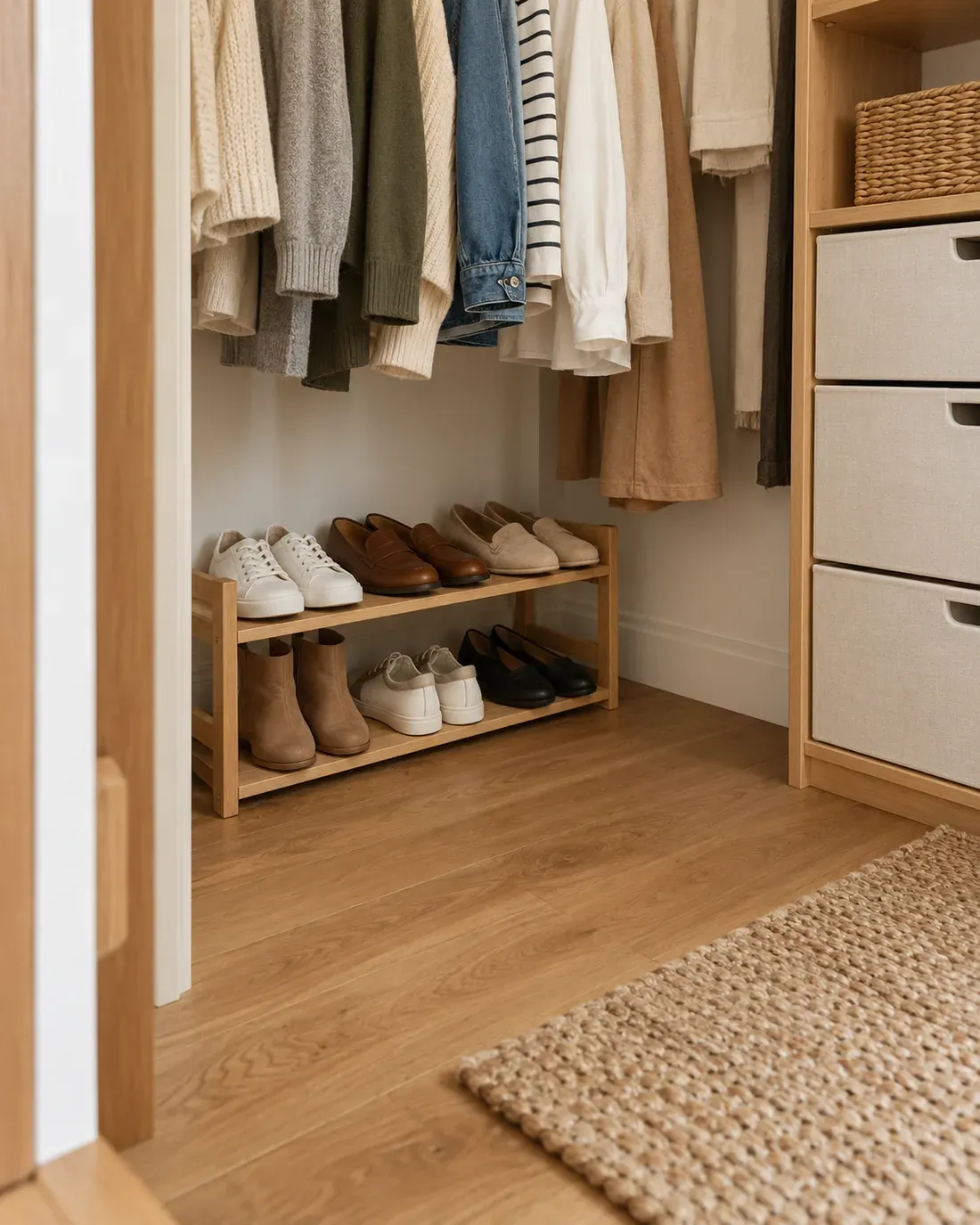
Shoes spread across the floor consume a surprising amount of the closet’s usable footprint. A narrow stackable rack or low vertical shelf lets you see pairs at a glance while preserving space for a laundry basket or vacuum. Measure the tallest shoes you intend to store before buying; ankle boots often need a taller opening than flats.
Put everyday pairs near the front and occasion shoes higher or farther back. Avoid stacking shoes loose in deep piles, where the bottom pair disappears. If the closet is shallow, check that a rack does not project into the path of the door.
4. Give stacks their own shelf dividers
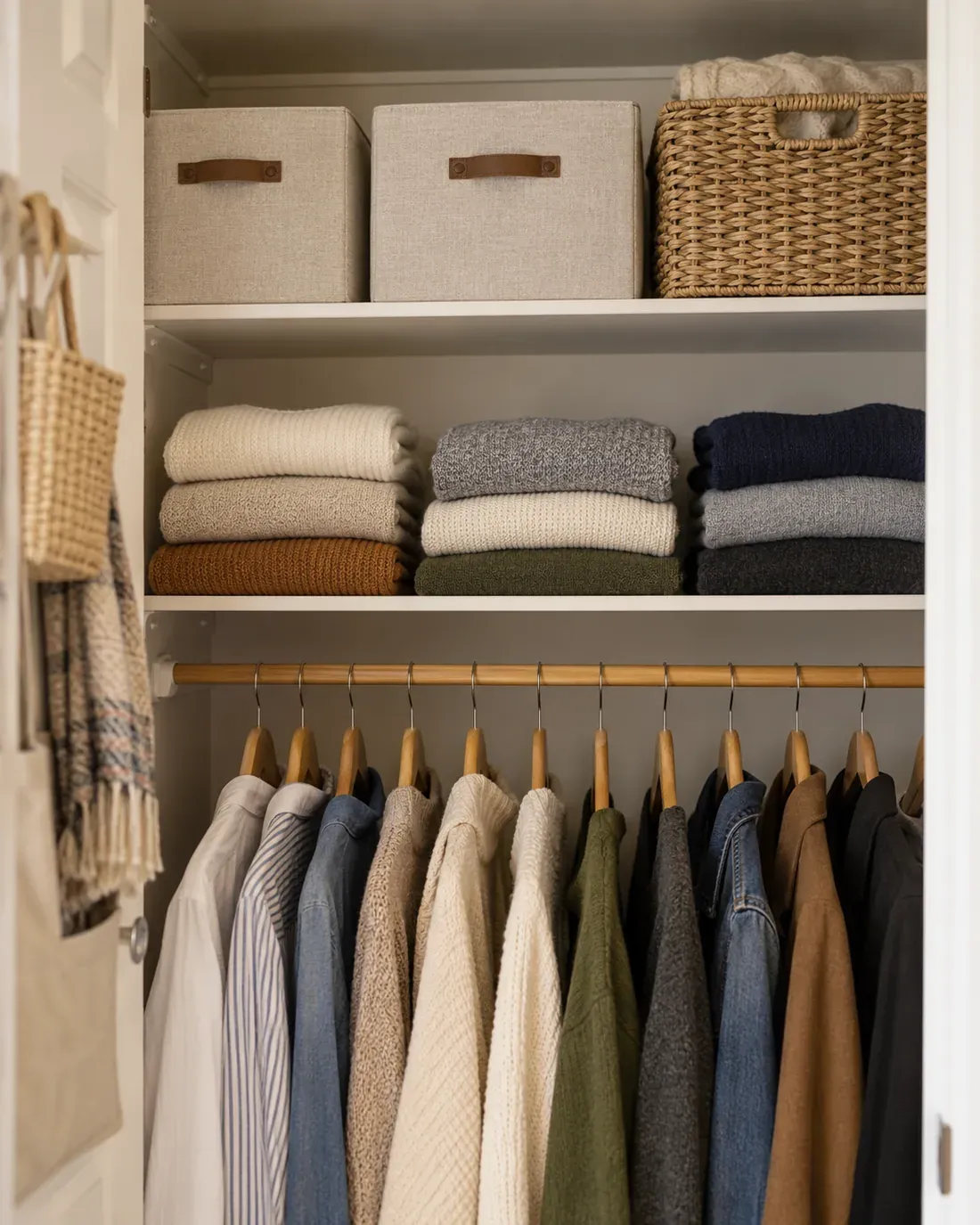
A tall stack of sweaters tends to slump into the next category. Shelf dividers set a boundary without requiring a new cabinet, so folded knits, denim and linens can stay in separate columns. Keep each stack low enough to remove one item without pulling down the rest. Heavy sweaters are better folded than hung, which can stretch their shoulders.
Choose dividers that fit the shelf thickness and depth. Clip-on styles can be renter-friendly if the shelf surface is sound; screwed versions need appropriate installation. If your shelf is too deep to reach comfortably, place infrequently used items behind the daily stack rather than building an inaccessible tower.
5. Make the upper shelf a planned storage zone
The highest shelf is ideal for items you do not need every morning: off-season clothing, spare bedding or a travel bag. Store each category in a separate, labeled bin and leave enough room to pull it forward safely. A soft-sided bin may fit an irregular space better than a rigid box, while a lidded container protects rarely used textiles from dust.
Do not put heavy boxes where you must lift them above your head. A stable step stool and a reachable pull handle make a high shelf more useful. If the shelf is narrow, measure both its depth and the door opening; a box can fit the shelf yet be impossible to maneuver into place.
6. Add a hanging organizer for folded items
A fabric hanging organizer creates small cubbies for T-shirts, workout clothes or scarves when there is no drawer unit. It works best in a section where sacrificing a little rail width gives you more useful vertical storage. Assign one category per cubby, keeping daily items between shoulder and waist height.
Check the organizer’s dimensions with its shelves loaded, not just empty. Heavy items can make fabric units sag and crowd neighboring hangers. A narrow, sturdy organizer is often more practical than a wide one. If your closet already has adequate drawers, leave the rod free for garments that truly need hanging.
7. Use the door carefully for shallow storage
The inside of a hinged closet door can hold belts, lightweight accessories or a slim shoe organizer. First open the door fully and check the clearance to shelves, clothing and adjacent walls. Over-door hooks need enough space above the door and should not prevent it from closing. A sliding door usually makes door-mounted storage impractical.
Keep door storage light and easy to access. Screwed hooks need suitable backing; adhesive hooks have surface and weight limits and may damage some finishes when removed. If the door is hollow or thin, do not assume it can support a loaded rack. The simplest option may be a few individual hooks rather than a full panel.
8. Choose clear or labeled bins for the right items
Bins stop small things from spreading, but an unlabeled wall of boxes creates a different problem. Clear bins make contents visible; opaque bins give a calmer look if you add plain labels. Use them for categories that naturally belong together, such as swimwear, winter accessories or spare hangers. Avoid putting every individual object into its own container.
Measure the shelf and leave finger space so each bin can be removed easily. A shallow bin is often better than a deep one for socks or accessories because you can see the bottom. When a bin overflows, edit its contents before buying another box.
9. Separate everyday clothes from seasonal clothes
Give the easiest section of the closet to clothes you wear now. Less-used pieces can move to the far end of the rail, an upper shelf or suitable storage elsewhere in the home. This does not require a total wardrobe switch each season. Even moving thick coats away from the center in warm months makes the daily rail easier to use.
Keep a few transitional garments accessible for changing weather. Store only clean, fully dry textiles, and choose containers suited to the storage conditions. For more ways to allocate limited floor space around a wardrobe, see our studio apartment layout ideas.
10. Divide drawers by task
If your closet includes drawers, use simple dividers to keep socks, underwear and small folded garments from becoming one mixed layer. Adjustable dividers suit changing categories; small boxes are useful for a drawer with several tiny items. Stand folded T-shirts or lightweight knits upright where the drawer depth allows, so you can see every piece without lifting a stack.
Measure the drawer’s inside height as well as its width. A divider that catches when the drawer closes will quickly become annoying. Leave a little free space so clean laundry has somewhere to go; a drawer filled to its rim is difficult to maintain.
11. Hang accessories where you can see them
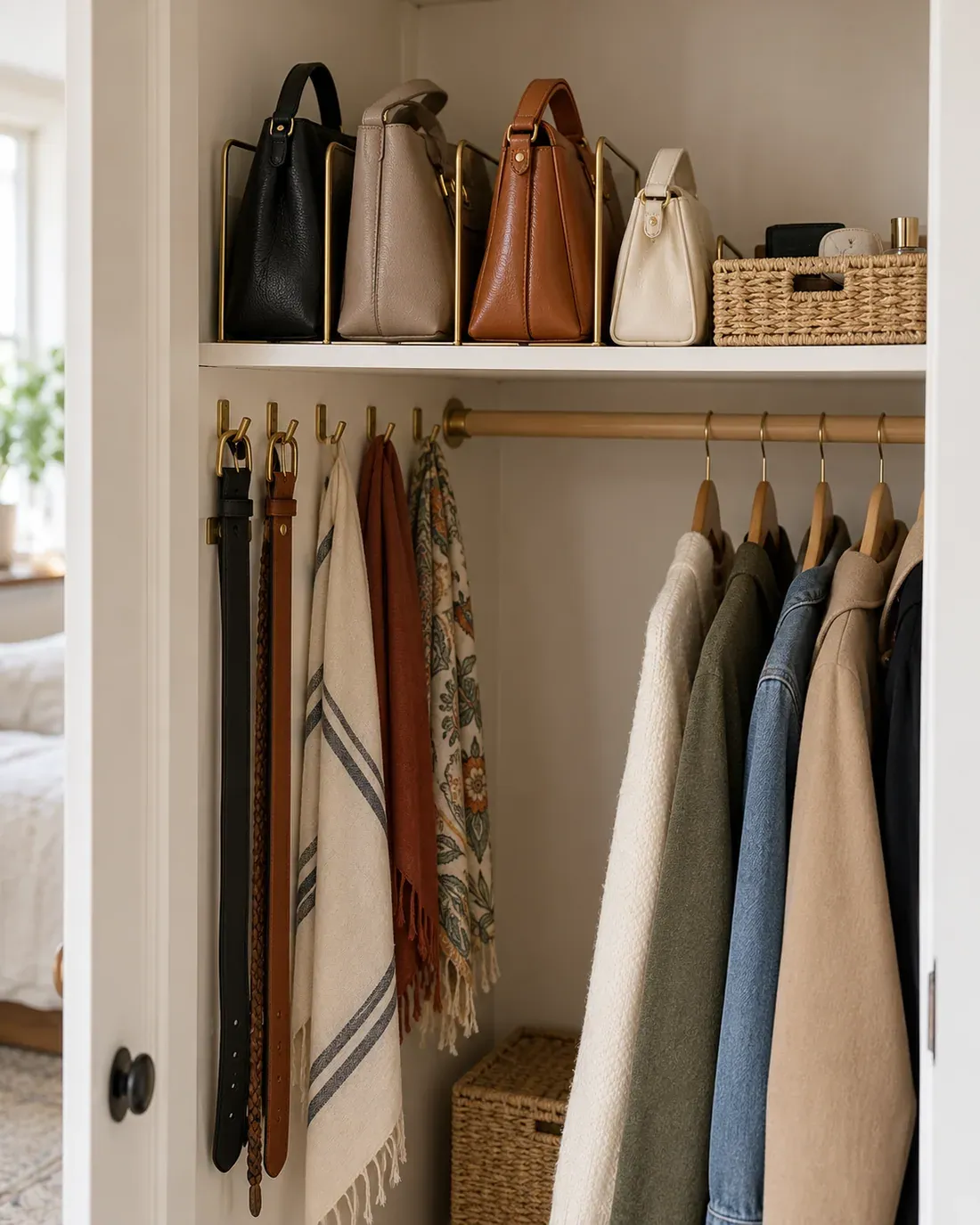
Belts, scarves and jewelry can occupy more space when they are tangled in boxes than when they are stored vertically. A hook rail, small peg strip or compartmented hanging organizer puts the selection in view. Locate it beside the garments you wear with those accessories, rather than across the room where items will be left out.
Keep delicate pieces away from rough hooks that could snag them. Do not overload a single hook with a heap of scarves; several lightly used hooks are easier to browse. Check installation and clearance before mounting anything to the closet wall or door.
12. Keep frequently used items in open baskets
Baskets are useful for items you grab and return often: a gym kit, everyday scarves or a child’s school accessories. An open basket lets you drop items back without opening a lid, which makes the system more likely to survive a busy morning. Place it at a height that the person using it can reach.
Limit each basket to one broad category and choose a washable or wipeable material where needed. A deep basket packed with unrelated objects quickly becomes a search bin. If an item is needed daily, do not place its basket on the top shelf simply because there is room there.
13. Use awkward corners for narrow categories
The space beside a closet wall or behind a door may be too narrow for another stack of clothes but wide enough for a hook strip, belt rail or slim basket. Measure what you can actually reach when the closet is full. A corner has value only if you can retrieve and return its contents without moving half the wardrobe.
Try storing a single type of item there, such as umbrellas, a garment steamer or spare tote bags. Keep electrical equipment and cords stored according to their instructions. If the corner blocks access to a service panel or ventilation, leave it clear.
14. Give handbags dedicated support
Handbags are easier to keep in shape when they sit upright on a shelf or hang from suitable hooks with enough space around them. Group the bag you use most near the front and put occasional bags higher up. A shelf divider or small basket can prevent soft bags from toppling into the clothes beside them.
Avoid hanging heavy bags by delicate straps for long periods. Fill rarely used soft bags lightly with clean paper or fabric if they collapse, and keep them away from damp areas. The same principle of a visible, contained home applies to keys and bags in a narrow entryway.
15. Split long and short hanging items
Even without adding a second rod, separating long garments from short ones reveals how much usable space sits below each group. Put dresses and long coats on one end, then use the floor beneath shirts for shoes or low drawers. This keeps a storage unit from crushing hems and gives the rail a simple order.
Check where the closet door opens and place the daily category on the easiest side. If a full-length garment is worn often, it deserves accessible space too. Organizing by actual garment length is more helpful than forcing everything into a perfectly symmetrical layout.
16. Rotate seasonal clothing with a clear rule
At the start of a new season, move the pieces you will use in the coming weeks into the reachable zone. Review what is coming out of storage before returning everything: stained, damaged or unworn items need attention, not another year in a box. Label stored clothing by type and season, not a vague word like “miscellaneous.”
The amount you move should fit your climate and storage space. In a mild climate, swapping a few bulky layers may be enough. Avoid compressing delicate or moisture-prone fabrics in unsuitable bags, and let anything washed dry completely before storing it.
17. Finish with a weekly five-minute reset
A closet stays useful through small, repeatable actions. Once a week, return clean clothes to their category, empty the stray-items basket and put shoes back in pairs. When the laundry is done, check that the everyday rail still has room to move. The reset is easier when every category already has a defined place.
Keep a small donation bag nearby only if it will actually be taken out when full. If one spot repeatedly gets messy, adjust that spot rather than blaming yourself: perhaps the hook is too high or the bin is too small. A good system should match the way you use the closet.
Common small closet organization mistakes
The most common mistake is buying containers before deciding what they need to hold. Oversized bins steal shelf space; too many tiny boxes make daily dressing slow. Packing the rail tightly can also hide clothes and crease them. Leave enough room to remove one hanger easily, and keep the most-used items within reach.
Watch for organizers that interfere with the door, cover an outlet or rely on weak fixings. Heavy hanging shelves and loaded door racks need particular care. If you are renting, plan for reversibility, but still follow the product’s surface and weight guidance. A removable hook that fails under a heavy bag is not a practical storage solution.
How to keep a small closet organized long-term
Treat the closet as a set of limited zones, not a space that should absorb everything indefinitely. Return categories to the same locations, review seasonal pieces when weather changes, and remeasure before adding another organizer. If one category grows, decide what to edit or relocate before it spills into the walkway or onto the floor.
The best closet setup makes tomorrow morning easier: clothes are visible, shoes are paired and the items you reach for live at a sensible height. Start with the one bottleneck that frustrates you most, then add the next change only when you know what it needs to solve.
Looking for more ideas? Browse our storage & organization stories.
Save to Pinterest